Puppy Leash Training Methods: Step-by-Step Guide to Leash Training Your Puppy
Bringing a new puppy home is an exciting adventure. One of the first skills I focus on is leash training. Teaching your puppy to walk calmly on a leash is essential for safe and enjoyable outings. It builds trust, strengthens your bond, and helps your puppy explore the world confidently. In this guide, I share simple, effective puppy leash training methods that anyone can follow. Whether you live in a busy city or a quiet neighbourhood, these steps will help you and your puppy enjoy every walk together.
Puppy Leash Training Methods That Work
Starting leash training can feel overwhelming, but breaking it down into clear steps makes it manageable. Here are the puppy leash training methods I use to set my puppies up for success:
Introduce the Collar and Leash Indoors
Before heading outside, let your puppy get used to wearing a collar and leash inside the house. I let my puppy wear the collar for short periods, rewarding calm behaviour with treats and praise. Then, I clip on the leash and let them drag it around gently while supervised. This helps the puppy associate the leash with positive experiences.
Practice Walking on the Leash Indoors
Once your puppy is comfortable with the leash, hold it and encourage them to follow you around the room. Use treats to guide them and reward every step they take beside you. Keep sessions short and fun to maintain their interest.
Move to a Quiet Outdoor Space
When your puppy walks well indoors, it’s time to try outside. Choose a quiet spot with few distractions. Keep the leash short but loose, and use treats to keep your puppy’s attention. Praise them often for walking beside you calmly.
Teach a Cue for Walking
Use a simple word like “let’s go” or “heel” to signal your puppy to start walking. Say the cue cheerfully and reward your puppy when they respond. Repeating this helps your puppy understand what you expect.
Handle Pulling Calmly
Puppies often pull on the leash out of excitement. When this happens, stop walking immediately. Wait for your puppy to relax and come back to your side before moving again. This teaches them that pulling does not get them where they want to go.
Gradually Increase Distractions
As your puppy improves, practice in busier areas with more sights and sounds. Keep treats handy and reward your puppy for staying focused on you. This builds their confidence and good behaviour in real-world situations.
Keep Training Sessions Short and Positive
Puppies have short attention spans. I keep leash training sessions to 5-10 minutes, several times a day. Always end on a positive note with praise or playtime.
By following these puppy leash training methods, you create a strong foundation for safe and happy walks.

What is the Hardest Thing to Teach a Dog?
From my experience, the hardest thing to teach a dog is patience and impulse control. Puppies are naturally curious and energetic. They want to explore everything immediately. Teaching them to wait calmly, especially on a leash, takes time and consistency.
For example, when a puppy sees another dog or a person, their instinct is to rush forward. Training them to stop, sit, or walk calmly beside you instead requires gentle but firm guidance. Using treats and praise to reward calm behaviour helps your puppy learn that patience brings rewards.
Another challenge is teaching your puppy to ignore distractions. Busy streets, loud noises, and other animals can easily pull their attention away. Gradually exposing your puppy to these distractions while reinforcing good behaviour is key.
Remember, every puppy learns at their own pace. Patience and kindness go a long way in overcoming these challenges.
Essential Tools for Puppy Leash Training
Having the right tools makes leash training easier and more effective. Here are the essentials I recommend:
A Comfortable Collar or Harness
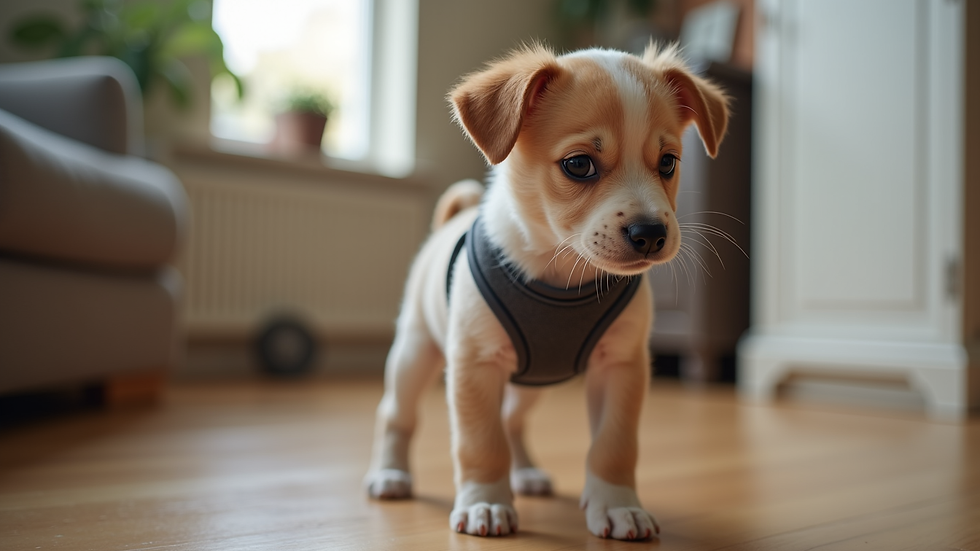
Choose a collar or harness that fits well and feels comfortable. Harnesses are often better for small or delicate puppies because they reduce strain on the neck.
A Lightweight Leash
A 4 to 6-foot leash gives you control without too much slack. Avoid retractable leashes during training because they encourage pulling.
Tasty Treats
Use small, soft treats that your puppy loves. Treats are powerful motivators and help your puppy focus on you.
A Clicker (Optional)
Clicker training can speed up learning by marking good behaviour precisely. If you prefer, you can use a verbal marker like “yes” instead.
Having these tools ready before you start makes the training process smooth and enjoyable.
Step-by-Step Puppy Leash Training Routine
Here is a simple daily routine to follow for effective leash training:
Morning Session: Indoors
Put on the collar and leash.
Practice walking around the house for 5 minutes.
Reward calm walking and following your lead.
Afternoon Session: Quiet Outdoor Spot
Take your puppy to a calm area outside.
Use the walking cue and encourage your puppy to stay by your side.
Stop if your puppy pulls and wait for calmness.
Reward frequently.
Evening Session: Short Walk in a Busier Area
Visit a park or street with mild distractions.
Keep the leash short and use treats to maintain focus.
Praise your puppy for ignoring distractions and walking nicely.
Playtime and Relaxation
End the day with play or cuddles to reinforce your bond.
Consistency is key. Doing this routine daily helps your puppy learn quickly and enjoy leash walks.

Tips for Success and Common Mistakes to Avoid
Leash training can be challenging, but these tips will help you stay on track:
Be Patient and Positive
Puppies respond best to gentle encouragement. Avoid yelling or pulling on the leash.
Use High-Value Treats
Save special treats just for leash training to keep your puppy motivated.
Keep Sessions Short
Long sessions can tire or frustrate your puppy. Short, frequent sessions work best.
Avoid Using the Leash as Punishment
Never jerk or drag your puppy. The leash should be a tool for guidance, not fear.
Practice Regularly
Daily practice helps your puppy build good habits faster.
Watch Your Body Language
Stay relaxed and confident. Your puppy picks up on your energy.
By following these tips and avoiding common mistakes, you create a positive learning environment for your puppy.
Growing Together: Enjoying Walks with Your Well-Trained Puppy
Leash training is just the beginning of a wonderful journey with your puppy. Once your puppy learns to walk calmly on a leash, you open the door to many adventures. Exploring Mombasa’s parks, beaches, and neighbourhoods becomes a joy for both of you.
Remember, every puppy is unique. Celebrate small victories and keep training fun. Your patience and love will help your puppy grow into a confident, well-behaved companion.
If you want to learn more about leash training a puppy, check out trusted resources and local experts who understand the needs of dogs in Mombasa.
Together, you and your puppy can enjoy safe, happy walks every day.
Thank you for reading this guide. I hope it helps you and your puppy start your leash training journey with confidence and joy!


Comments